


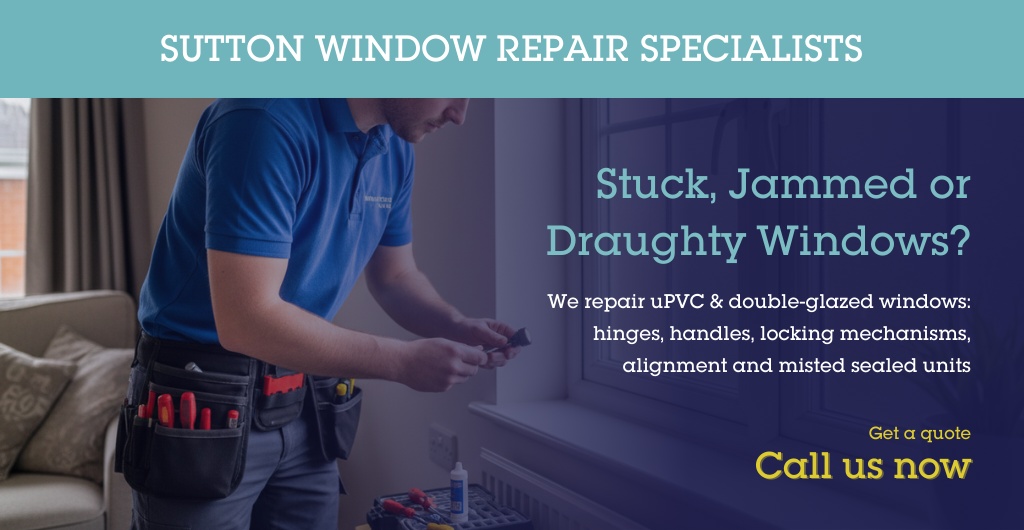
Why Your uPVC Window Won’t Close
If you’re wondering why your uPVC window won’t close, you’re not alone. Many homeowners in Sutton and beyond face this frustrating issue with their double-glazed uPVC windows. Common culprits include wear and tear on hinges, misalignment from settling, or problems with the locking mechanism, leading to issues like a window catching on frame or a window won’t latch properly.
uPVC windows are durable, but over time, factors like temperature changes, poor installation, or lack of maintenance can cause them to stick or fail to shut fully. This guide explains the most likely reasons, safe ways to identify the problem, and why professional help is often the best next step. We’ll focus on standard uPVC casement windows, avoiding more complex types like sash or sliding designs.
Understanding the Basics of uPVC Window Operation
uPVC windows typically use friction stays (hinges) on one side and a multi-point locking system to secure them. When everything works correctly, the sash – the moving part of the window – pivots smoothly and latches securely.
Problems arise when components wear out or shift. For instance, a dropped sash occurs if the window frame has twisted slightly, pulling the sash out of alignment. This is common in older installations where the building settles or thermal expansion plays a role.
Similarly, a misaligned window might result from loose screws or degraded seals, making the sash rub against the frame. Recognising these early prevents further damage, like cracked seals or strained locks.
Common Reasons Why Your uPVC Window Won’t Close
Several issues can prevent your window from closing properly. Here’s a breakdown of the most frequent causes, based on typical uPVC window behaviour.
1. Window Catching on Frame
A window catching on frame is one of the top complaints. This happens when the sash drags along the frame edges during closing, often due to:
- Warped or swollen frames: uPVC can expand in heat or absorb moisture if seals fail.
- Loose or worn beading: The plastic strip holding the glass can loosen, allowing the sash to shift.
- Obstructions: Debris, old paint, or even insect nests in the track.
If you notice scraping sounds or visible rubbing marks, this is likely the issue. Forcing it closed risks bending the frame further.
2. Dropped Sash
A dropped sash means the window has sagged, so it no longer lines up with the frame. Key triggers include:
- Loose hinge bolts: Over time, vibrations from traffic or wind loosen fixings.
- Frame distortion: Common in homes with shifting foundations or uneven subsidence.
- Wear on friction stays: These hinges weaken, failing to hold the sash at the correct height.
You might see the sash sitting lower than before, preventing a clean seal. This also leads to draughts and higher energy bills.
3. Misaligned Window
A misaligned window affects smooth operation across the entire sash. Causes often involve:
- Toe and heel adjustment needed: The bottom corners (toe and heel) can shift out of square.
- Hinge failure: Friction stays bend or seize, pulling the sash off track.
- Locking mechanism issues: Multi-point espagnolette locks stretch, misaligning shootbolts.
Check if the window closes flush on all sides. Uneven gaps signal misalignment.
4. Window Won’t Latch
If your window won’t latch, the locking system is probably at fault. This includes:
- Worn handles or gearboxes: Stiff operation indicates internal wear.
- Stretched hooks: Keepers on the frame wear down, failing to engage.
- Seal compression: Thick rubber seals harden and bulge, blocking the latch.
Even if it appears closed, poor latching compromises security and insulation.
Other Potential Causes to Consider
Beyond these, less common issues can contribute:
- Faulty hinges or friction stays: Rust, dirt buildup, or metal fatigue stops pivoting.
- Blown seals or misted units: Pressure changes make the sash harder to move (though this is more about vision than closing).
- Installation errors: If recently fitted, check for manufacturing defects.
Temperature extremes exacerbate all these, as uPVC expands and contracts.
Safe Initial Checks Without Risky DIY
Before calling in experts, perform these non-invasive inspections. Never force the window, use excessive tools, or attempt adjustments yourself – this can void warranties or cause injury.
- Visual inspection: Open and close slowly. Note where it sticks – top, bottom, or sides?
- Clean tracks and hinges: Wipe away dirt with a soft cloth and soapy water. Avoid lubricants unless specified.
- Check handles and locks: Ensure they turn fully without grinding.
- Test adjacent windows: If multiple are affected, it points to frame movement.
If the issue persists, document photos of the problem for your repair technician.
For more on symptoms, see our detailed guide on window won’t close symptoms.
Why Professional Diagnosis Matters
uPVC windows involve precise engineering. Amateur fixes often worsen problems, leading to costly replacements. Skilled technicians use specialised tools for adjustments like toe and heel service, which realigns corners safely.
At Window Repairs Sutton, our team handles uPVC window repairs, window hinge friction stay replacement, and draught proofing adjustments. With 10+ years’ experience and public liability insurance, we focus on services like toe and heel adjustment and window lock repairs – excluding sash, sliding, or wooden windows.
Explore our toe and heel service or window hinge friction stay replacement for specifics.
When to Book a Repair
Act quickly if you notice:
- Persistent sticking despite cleaning.
- Gaps allowing draughts or noise.
- Security concerns from faulty latching.
- Visible damage to hinges or seals.
Local to Sutton? Contact us at Window Repairs Sutton on 020 8138 0796 or email info@window-repairs-sutton.co.uk. We’re DBS-checked and prioritise safe, efficient fixes.
Browse our full guides section for related advice, like handling misted units or lock issues.
FAQ
Why has my uPVC window suddenly stopped closing properly?
Sudden issues often stem from recent weather changes causing expansion, or gradual wear finally tipping the balance. A dropped sash or misaligned window is common after 10-15 years.
Can I fix a window catching on frame myself?
Basic cleaning helps, but alignment needs pro tools. Avoid DIY adjustments to prevent frame damage.
How much does repairing a uPVC window that won’t latch cost?
Costs vary by issue – hinge replacement or adjustments are straightforward. Get a no-obligation quote via /contact/.
Do all uPVC windows develop these problems?
Not all, but regular maintenance like lubrication every few years helps. We offer draught proofing and alignment as preventive services.
Is a misaligned window a sign of bigger structural issues?
Sometimes, like subsidence, but often just component wear. A technician assesses this during toe and heel service.
This guide equips you to understand why your uPVC window won’t close without guesswork. For tailored solutions, reach out – we’re here to restore smooth operation.
